
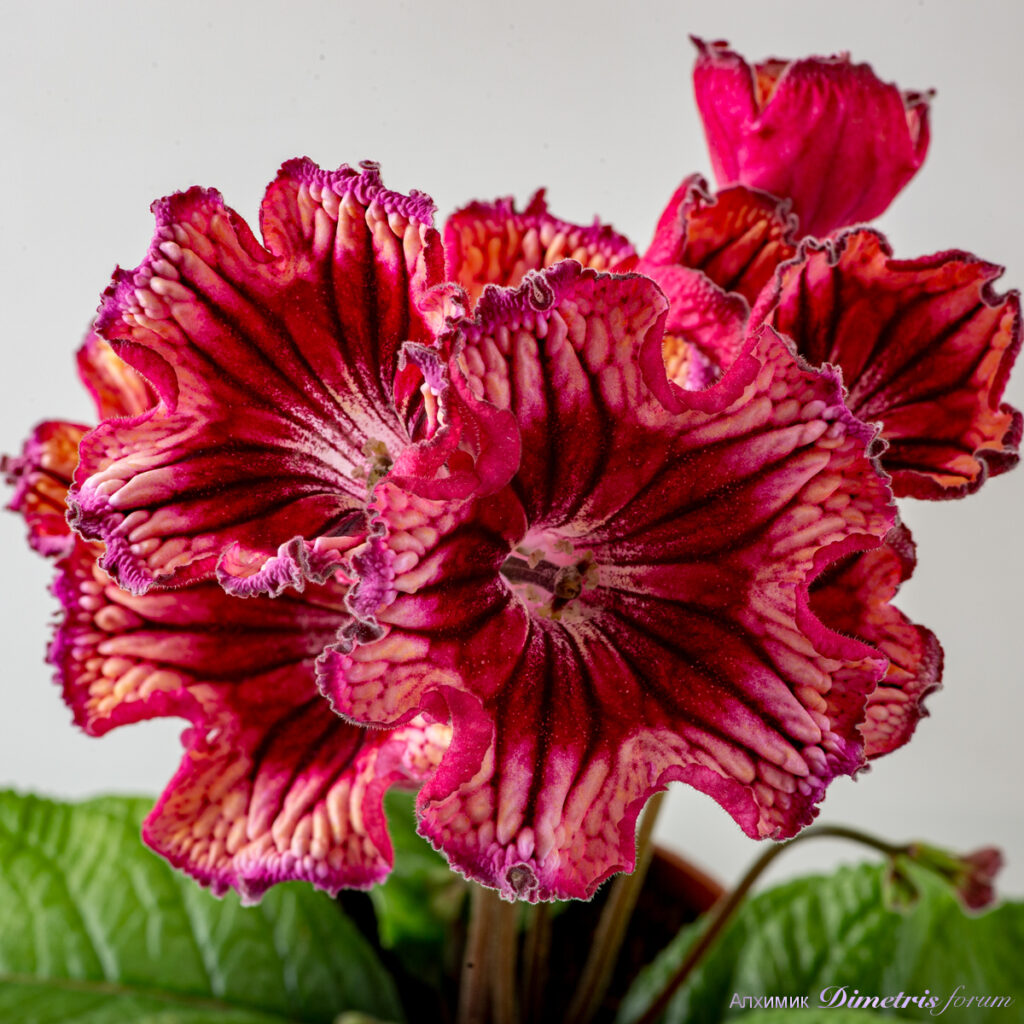
A peloric flower is a flower form with radial symmetry. Normally, streptocarpus flowers have only bilateral symmetry: the upper and lower parts of the flower differ from one another. Many flowering plants naturally possess radial symmetry, but this is not the case in streptocarpus. In streptocarpus, a peloric flower is the result of a mutation.
Moreover, this mutation differs from the type of pelory found in African violets (Saintpaulias). In streptocarpus, peloric flowers arose through changes in the genes responsible for the spatial patterning of the upper petals within the floral meristem. As a result, the upper petals fail to develop, and their positions in the meristem are occupied by petals that develop according to the pattern of the lower petals.
However, this is only part of the story. The disruption of genes responsible for the spatial organization of petals within the meristem affects not only the shape of the flower but also the number of petals it produces. While a normal streptocarpus flower has five petals, peloric flowers may have a different number.
If the meristem is relatively small, the flower may produce only four petals. If the meristem becomes larger due to the action of other genes controlling meristem size, six or even more petals may develop around the circumference of the flower.
Sometimes an unusual structure that could be described as “one and a half petals” is formed. This occurs when there is more space available in the meristem than is needed for a single petal, but not enough space for two fully separate petals. In such cases, a petal begins developing as a single structure and later partially divides into two sections, often asymmetrically.
The first streptocarpus cultivar to exhibit a stable peloric flower form was DS-1512, introduced in 2015. However, work in this direction began much earlier, in 2010. It took five years of breeding effort to obtain and stabilize this mutation.
As it turned out, achieving a stable peloric flower form in streptocarpus required mutations in several genes rather than just one. Only by combining these altered genes into the same genetic background was it possible to produce a consistently stable peloric form.
More than fifteen years of work have yielded significant results. Today, peloric genes are present in many cultivars in a hidden state and do not express themselves visibly. However, through hybridization, the necessary genetic combinations may come together again, resulting in seedlings with peloric flowers even when neither parent displays the trait.
The work at the Dimetris Breeding Center continues. New horizons are only beginning to open, and each new generation of seedlings brings fresh opportunities to explore the genetics of flower development and create even more extraordinary forms of streptocarpus. The photograph shows DS-Fortune (2248), a cultivar that has proven its value over many years of cultivation.
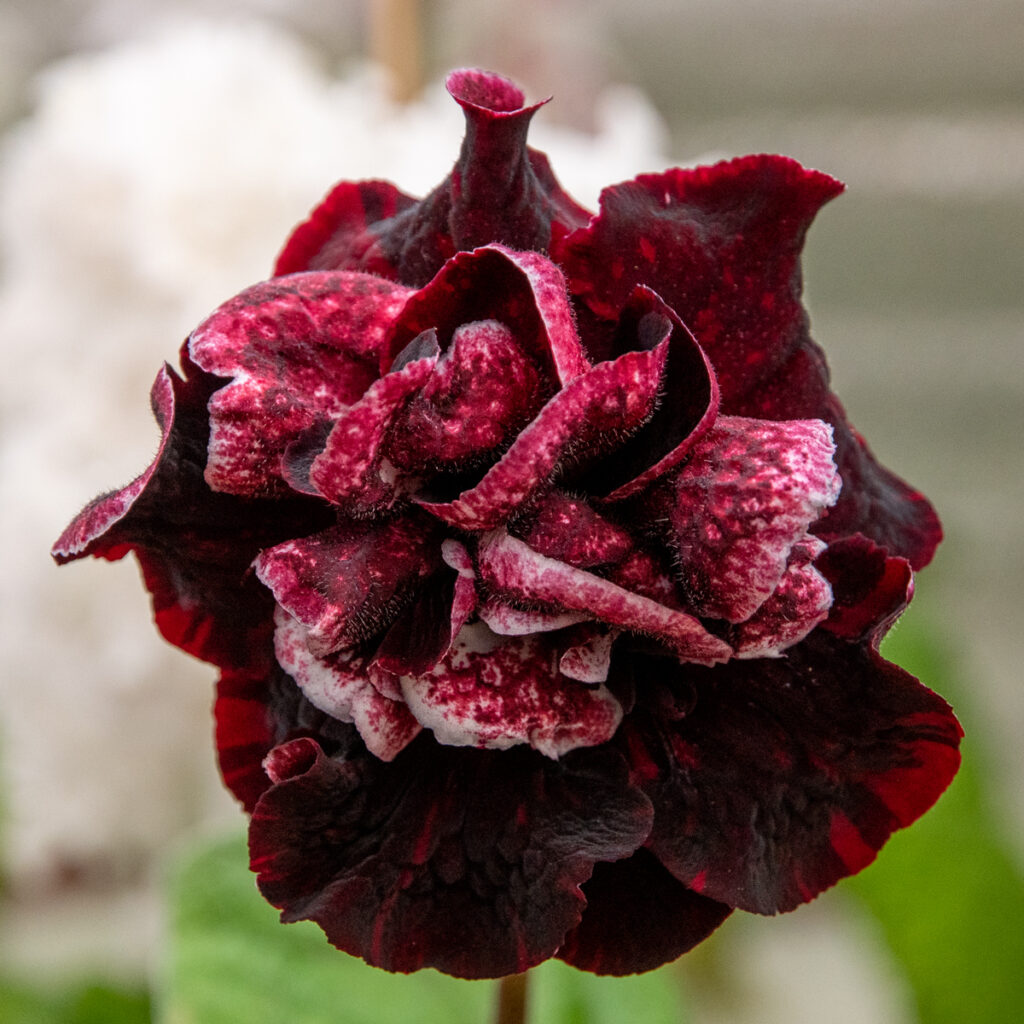
Streptocarpus DS-3104